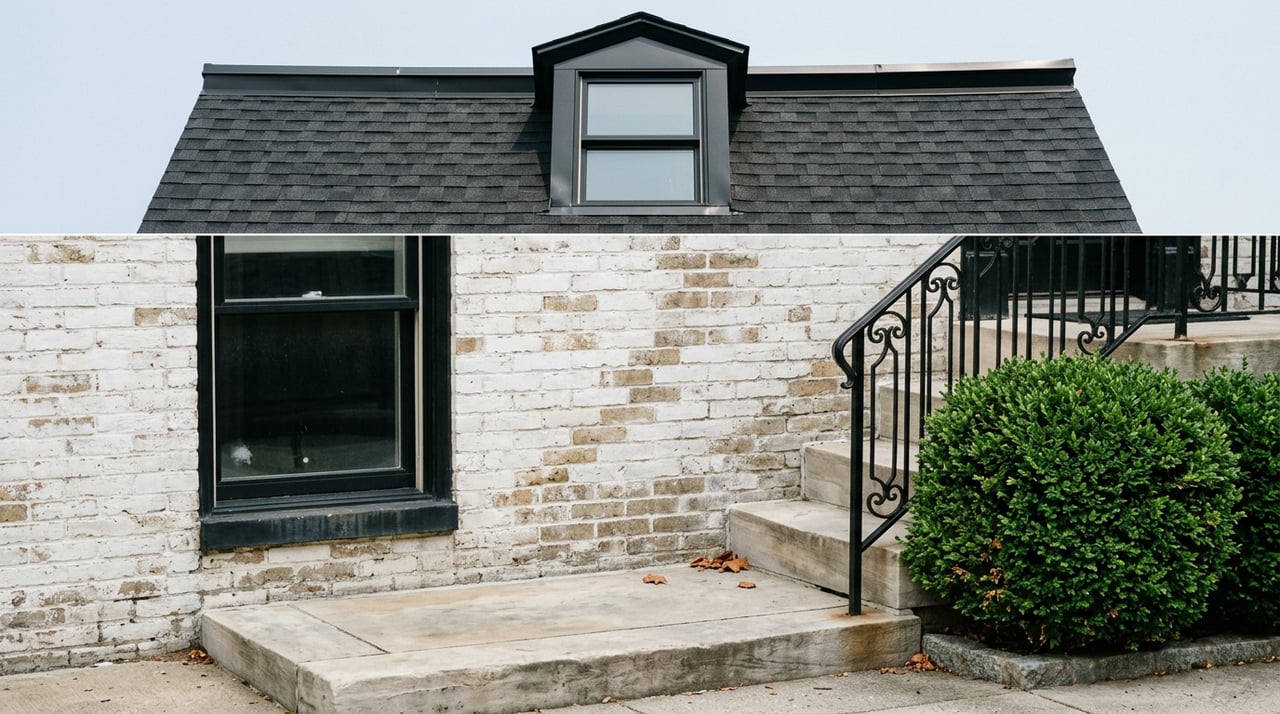
A renovated single-family home near Historic Roswell goes under contract at $960,000. The comparative market analysis supported it, three recent sales in the same pocket all landed close to that number. Then the lender's appraisal comes back at $940,000. Not because the home lost value in the six weeks between listing and closing, but because the appraiser could only find three truly comparable sales to lean on, and none of them matched perfectly. That $20,000 gap is not a fluke. It is a pattern local lenders and agents see often enough that it shows up in guides written specifically to help Roswell buyers understand the difference between a CMA and an appraisal.
Most people moving to Roswell assume the opposite story. They picture Canton Street on a Saturday morning, the Vickery Creek trails, the 640-acre Historic District that made the National Register back in 1974, and they conclude that this is where the action is: the fastest closings, the tightest bidding, the most competitive market in the city. The data says something different, and understanding why matters more than the headline number.
The assumption charm equals speed
It is an easy assumption to make. Roswell's identity is built around its historic core. Barrington Hall and Bulloch Hall, both dating to the 1830s and 1840s, anchor a downtown that draws both buyers and tourists. Canton Street alone carries more than 30 restaurants and shops. If you are relocating and comparing neighborhoods, the historic district reads as the obvious center of gravity, the place where demand should be highest and homes should move quickest.
But days on market tells a different story. In Realtor.com's neighborhood breakdown from March 2026, homes in Martin's Landing, a 1970s and 1980s lake, pool, and tennis community built around HOA amenities rather than antebellum architecture, sold in a median of 23 days. The Roswell Historic District came in at 30 days. Horseshoe Bend, a golf course community with larger lots, took 37 days. Barrington sat at 46, and Holcombs Crossing at 48.
The gap between Martin's Landing and the Historic District is not enormous on its own. But it inverts the story most buyers walk in with. The neighborhood built on repeatable, comparable inventory outpaces the neighborhood built on character and scarcity, and that inversion holds a lesson for anyone deciding where to put an offer.
What the price tiers actually look like
Pricing follows a similar logic once you stop treating Roswell as one market. Martin's Landing homes sold for a median of $569,808 in the year ending May 2026, up 9.7% from a year earlier, according to Redfin's neighborhood data. That is well below the citywide median, which various sources placed between roughly $602,500 and $658,000 across the first half of 2026 depending on the reporting window. The Historic District, by contrast, carries current asking prices well above the citywide figure, and Roswell's river and golf communities sit in a different tier entirely.
| Neighborhood | Character | Typical price position |
|---|---|---|
| Martin's Landing | 1970s-80s HOA community, lakes, pools, tennis | Below citywide median |
| Roswell Historic District | Greek Revival and restored homes near Canton Street | Above citywide median |
| Horseshoe Bend | Golf course, larger lots | Upper-middle tier |
| Sentinel on the River | Riverfront, 1990s construction, private and gated | Roughly $1.15 million median |
| Nesbit Lakes | Amenity-rich, active neighborhood culture | Roughly $1.09 to $1.15 million range |
Sentinel on the River and Nesbit Lakes, Roswell's two signature luxury addresses, have carried median prices in the $1.09 million to $1.15 million range. Both are still organized around repeatable housing stock, not one-of-a-kind historic architecture. Sentinel on the River is a private, pedestrian-friendly community of around 162 single-family homes built in the 1990s along the Chattahoochee, with a clubhouse, pool, and tennis courts. Nesbit Lakes is known for an active social calendar and consistent neighborhood traditions. Even at the top of the market, Roswell's fastest and most predictable transactions tend to happen in places where recent sales look like the house currently for sale.
Why comps, not charm, set the pace
The mechanism behind this is not mysterious once you see it. A lender's appraisal depends on finding comparable sales, homes similar enough in size, age, condition, and location that an appraiser can defend the resulting number. In a subdivision like Martin's Landing, where dozens of homes share a similar footprint and vintage, that search is straightforward. In the Historic District, where houses reflect decades of individual renovation choices, sometimes reviewed by the city's Historic Preservation Commission and sometimes predating that oversight entirely, the pool of true comparables shrinks fast.
That scarcity does not make historic homes worth less. It makes them harder to price with confidence, which stretches the closing timeline even when buyer interest is strong. A guide comparing CMAs and appraisals in Roswell notes that proximity to Historic Roswell, lot size variation, finished basements, and recent renovations all drive adjustments, and that the more unique the home, the more care an appraiser needs when selecting real comparables. That extra care takes time. It also means a contract price that a CMA supports can still come in under a formal appraisal, forcing renegotiation or a buyer bringing extra cash to close the gap.
None of this shows up on a portal listing. It shows up in the closing timeline, and it explains why the neighborhood with the strongest brand recognition in Roswell is not automatically the one that moves fastest or prices most predictably.
What this means if you are choosing between them
If you are comparing Roswell neighborhoods and speed or pricing certainty matters more to you than architectural story, an established amenity community with a deep bench of recent comparable sales will generally give you a smoother path to closing. If character and a walk to Canton Street matter more than speed, budget extra time for the appraisal process and go in with your eyes open about the comp gap.
A few practical notes worth carrying into that decision:
- If you are buying inside the Historic District, ask the seller for any prior Certificates of Appropriateness and permit records. Historic review through the city's Historic Preservation Commission does not replace standard building code review, so a renovation may need both approvals, which affects your own future timeline if you plan to update the home.
- Georgia's Preferential Property Tax Assessment Program can freeze county assessment for more than eight years on qualifying owner-occupied historic homes. If you are budgeting a historic renovation, it is worth confirming with the Georgia Department of Community Affairs whether a specific property qualifies under the current program.
- The federal historic rehabilitation tax credit may be relevant to renovation costs.
- If your lender's appraisal comes in below contract, ask your agent about available next steps before assuming the deal is dead.
A few common questions
How are exterior changes in the Historic District reviewed? Material exterior changes within the district generally involve review by the Historic Preservation Commission. Interior work not visible from the street typically follows standard permit review instead.
Is the historic district a bad investment because it moves slower? Slower is not the same as weaker. It reflects a smaller, more specialized buyer pool and a harder comp search, not lower demand. Prices in the district have stayed above the citywide median even with longer average market time.
Can I still apply for the property tax freeze if I already closed on a historic home? Program rules and application windows change year to year, so the most reliable step is confirming current eligibility directly with the Georgia Department of Community Affairs before you build a renovation budget around it.
Roswell rewards buyers who read its submarkets individually instead of treating the whole city as one number on a portal. If you are trying to figure out which of these patterns fits the way you want to buy or sell, Dawn Anderson can walk through the comps, the timeline, and the tradeoffs specific to the address you have in mind. Schedule a free market consultation to start that conversation.
This article is general information, not legal, tax or financial advice. Consult a qualified professional about your situation.